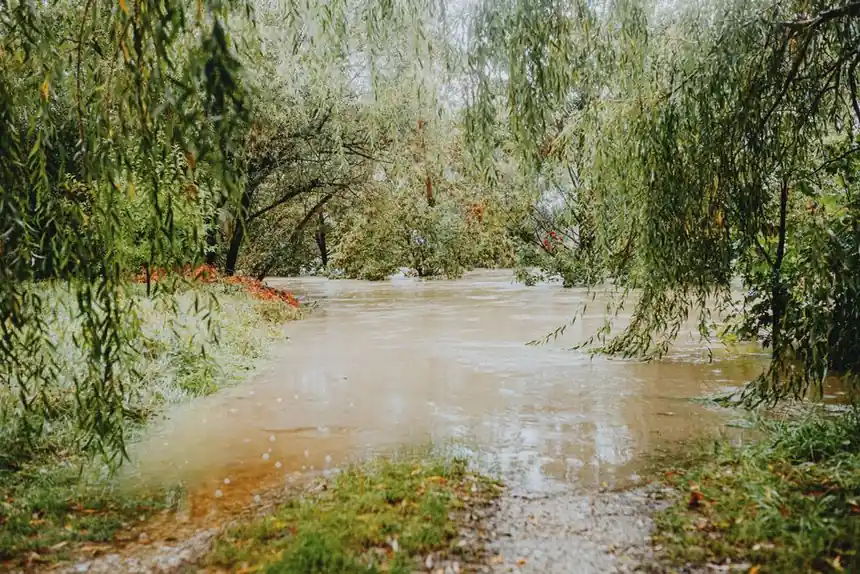
Storm water damage cleanup in West Valley City UT starts with getting standing water out of the structure within 24 to 48 hours - that window is what separates a dried-out basement from a mold remediation job. Every hour water sits, it wicks higher into drywall, creeps under baseboards, and soaks into the subfloor. We have pumped hundreds of flooded basements and crawl spaces across this valley, and the pattern is always the same: the homes that call within a day dry out in three or four days, and the ones that wait a week turn into a two-month rebuild.
Here is what actually happens when heavy rain overwhelms a West Valley City property, what you can safely do yourself, what it costs in 2026, and when it is time to hand it off to a crew with truck-mounted extraction and commercial drying equipment.
Why heavy rain floods West Valley City homes so fast
West Valley City sits in a bowl of clay-heavy soil, and that clay does not absorb water - it sheds it. When a storm dumps an inch of rain in an hour, the ground is already saturated from the previous storm, so the water has nowhere to go but downhill and into your foundation. That is why a 20-minute cloudburst in August can put four inches of water in a Granger basement while a neighborhood two miles away stays bone dry.
Three things drive most of the storm flooding we see here:
- Window wells and foundation drains that clog with leaves and silt. Once a window well fills, water pours straight through the frame into the basement.
- Sump pumps that quit during the storm. Power flickers, the pump stops, and the pit overflows in minutes.
- Gutters and downspouts that dump water right at the foundation. A single clogged downspout can push hundreds of gallons against the wall during a heavy rain.
Older homes near the Utah Cultural Celebration Center and along the Redwood Road corridor tend to have the worst drainage because their original grading has settled over decades. Newer builds out toward 5600 West usually fail differently - the sump pit is undersized for the lot, or the discharge line freezes and backs up in a late-fall storm.
If the water came in through a failed roof, that is a different job. Roof leaks during a storm let water travel down through the attic and into ceiling drywall, which is why we treat those calls as Roof Leak Water Extraction West Valley City UT and dry the ceiling cavity before it sags.
What to do in the first hour after storm water gets in
The first hour after storm water enters your home is about stopping the source and stopping the spread. Do these in order:
- Kill power to any flooded area at the breaker. Do not wade into standing water near outlets, appliances, or a sump pit until the circuit is off.
- Photograph everything before you move it. Wide shots of each room, close-ups of the water line on the wall, and pictures of any damaged furniture or electronics. Your adjuster will want these.
- Pull up wet rugs and move furniture legs onto foil or blocks. Dye from a wet rug can permanently stain carpet and hardwood in under 24 hours.
- Get the standing water moving. A wet/dry shop vac buys you time, but it will not pull water out of carpet padding or a subfloor.
- Start air movement. Fans and open windows slow mold growth, but they do not dry a wall cavity.
What you should not do: do not run a household box fan directly on a soaked carpet and call it done, and do not crank the furnace to "dry things out." Heat without dehumidification just moves moisture into the air, where it condenses on cooler surfaces like ductwork and interior walls.
If the water is more than an inch deep or has reached drywall, the honest answer is that a shop vac and a fan will not finish the job. That is when you want Emergency Water Extraction West Valley City UT - truck-mounted units pull water out of carpet and pad at a rate a wet/dry vac cannot touch.
How professional storm water damage cleanup actually works
Storm water damage cleanup West Valley City UT is a category of restoration work that removes flood water, dries the structure, and verifies the building is back to a safe moisture level before any repairs begin. It is not just pumping and leaving - the drying phase is where the job is won or lost.
Here is the sequence our technicians run on a typical flooded basement:
1. Water extraction
We start with a truck-mounted extraction unit and, for deep water, a submersible pump. Carpet and pad come up if the pad is saturated - pad rarely dries clean and is cheap to replace compared to the mold risk. We pull water out of the carpet, then out of the subfloor, then check the crawl space.
2. Moisture mapping
We use thermal imaging and pin-type meters to find water you cannot see. Water travels sideways through a wall cavity and shows up six feet from where it entered. Mapping tells us exactly where to place drying equipment instead of guessing.
3. Structural drying
Air movers and industrial dehumidifiers run for three to five days on a typical basement. We target 12 to 16 percent moisture content in framing - that is the dry standard for this climate. We check readings daily and adjust equipment placement as the walls dry.
Wet drywall usually gets cut out 12 to 24 inches above the water line so air can reach the cavity. That sounds aggressive, but leaving saturated drywall in place is how you end up with mold behind the paint three weeks later. If your crawl space took on water, that is its own job - Crawl Space Water Removal West Valley City UT uses different equipment because there is no room for standard air movers.
4. Antimicrobial treatment and verification
Once the structure is dry, we treat affected framing and any remaining surfaces, then take final moisture readings. We do not call a job complete until the readings match a dry control area in the same house.
How much does storm water damage restoration cost in West Valley City?
Typical 2026 pricing in this area runs $1,800 to $4,500 for a flooded basement with carpet and drywall involvement, and $6,000 to $15,000 or more when the water reached finished walls, hardwood, or a finished basement with cabinetry. The spread comes down to three variables: how deep the water got, how long it sat, and how much material has to come out.
Rough ranges we quote most often:
- Extraction only, water under an inch, no drywall contact: $600-$1,400
- Extraction plus 3-5 days of structural drying: $1,800-$3,500
- Drying plus drywall removal and replacement: $3,500-$8,000
- Finished basement with hardwood and cabinetry: $8,000-$15,000+
Two things move the number more than anything else. First, how fast you call - a job caught in the first 24 hours almost never needs mold remediation, which can add $2,000 to $6,000 on its own. Second, whether the water is clean or contaminated. Storm water that backed up through a floor drain is treated as Category 3, meaning affected materials come out rather than dry in place.
We give you the scope and the price before we start, and we bill insurance directly when the claim is covered.
Does insurance cover storm water damage in West Valley City?
Most homeowners policies in Utah cover storm water damage when the water entered through a storm-created opening - a broken window, a failed roof, a sump pump overflow, or surface water that came in through a doorway. What most policies exclude is groundwater that rose up through the foundation from a rising water table, and that distinction is the single biggest source of denied claims we see.
How to give yourself the best shot at a covered claim:
- Document the entry point with photos. A picture of water pouring through a window well is worth more than a picture of a wet floor.
- Do not throw anything away before the adjuster sees it. Bag damaged items and keep them.
- Keep a written timeline - when the storm hit, when you noticed water, when you called us.
- Ask your adjuster directly whether the loss is being classified as storm-driven or groundwater.
If the claim is denied, we can still do the work and give you a detailed invoice you can submit for a second review. We have seen denials reversed when the homeowner had clear documentation of the entry point.
Common mistakes we see after a West Valley City storm
The mistakes that cost homeowners the most money are almost always made in the first 48 hours, before anyone calls a professional.
- Waiting for the water to go down on its own. It will not. Water in a basement has nowhere to drain, and every day it sits, the mold clock runs.
- Only drying the visible wet area. Water wicks up drywall and sideways through framing. The wall looks dry at the surface while the cavity behind it stays wet for weeks.
- Running a dehumidifier from the hardware store. A consumer unit pulls maybe 30 pints a day. A commercial unit pulls 130 pints or more, and that is the difference between a four-day dry and a three-week dry.
- Putting off the sump pump repair. If your pump failed during the storm, it will fail again in the next one. Fix the pump and the discharge line before the next rain.
- Replacing carpet before the subfloor is dry. New pad over a wet subfloor traps moisture and grows mold under your feet.
One more: do not assume the smell is just "basement smell." A musty odor three days after a storm is the first sign of microbial growth, and it means the drying was incomplete.
When to call a professional
Call a professional the moment water reaches drywall, carpet pad, or a finished floor - that is the line where DIY drying stops working. Call immediately if any of these are true:
- Water is deeper than one inch or covers more than one room.
- The water came up through a floor drain or toilet (contaminated water).
- Your sump pump failed and the pit overflowed.
- You can see a water line on the drywall above the baseboard.
- The house still smells musty 48 hours after you dried it yourself.
Our team handles the whole job - extraction, drying, moisture verification, and the repairs that follow. We work directly with your insurance adjuster, and we can be on-site the same day you call. If you want to see how we run a full storm response, our Storm Water Damage Cleanup West Valley City UT page walks through the equipment and the timeline.
For homes and small businesses across the valley, we also handle larger losses through our Commercial Water Damage Restoration West Valley City UT service, which is built for retail floors, restaurants, and office space where downtime costs money by the hour.
Frequently Asked Questions
How do I clean up storm water damage in West Valley City?
Shut off power to flooded areas, photograph everything, remove wet rugs and furniture, then extract standing water. If water reached drywall or carpet pad, stop and call a restoration crew - surface drying will not reach the wall cavity, and mold can start within 24 to 48 hours.
Who does storm water damage cleanup in West Valley City UT?
West Valley City Water Damage Pros handles storm water damage cleanup across the city, from Granger and Hunter to the Redwood Road corridor. We run truck-mounted extraction, structural drying, and moisture verification, and we bill insurance directly when the loss is covered.
Does insurance cover storm water damage in West Valley City?
Usually yes when water entered through a storm-created opening like a broken window, failed roof, or overflowing sump pump. Groundwater that rose through the foundation is typically excluded. Document the entry point with photos - that single detail decides most claims.
How soon should storm water damage be cleaned in West Valley City?
Within 24 hours, and no later than 48. Mold can begin colonizing wet drywall and carpet pad in 24 to 48 hours, and the cost difference is real: a job caught on day one runs $1,800-$3,500, while mold remediation can add $2,000-$6,000.
Can I just dry my basement with fans and a dehumidifier?
Only if the water stayed under an inch and never touched drywall, carpet pad, or a finished floor. Once water reaches those materials, a consumer dehumidifier pulls about 30 pints a day versus 130+ for commercial equipment, and the wall cavity stays wet long enough to grow mold.
Get help with Water Damage Restoration in West Valley City
Storm water does not wait, and neither should you. West Valley City Water Damage Pros is available 24/7 for emergency storm water removal across the valley - we extract the water, dry the structure, and verify it is dry before we leave.
Call (385) 488-0549 now and we will get a crew headed your way.